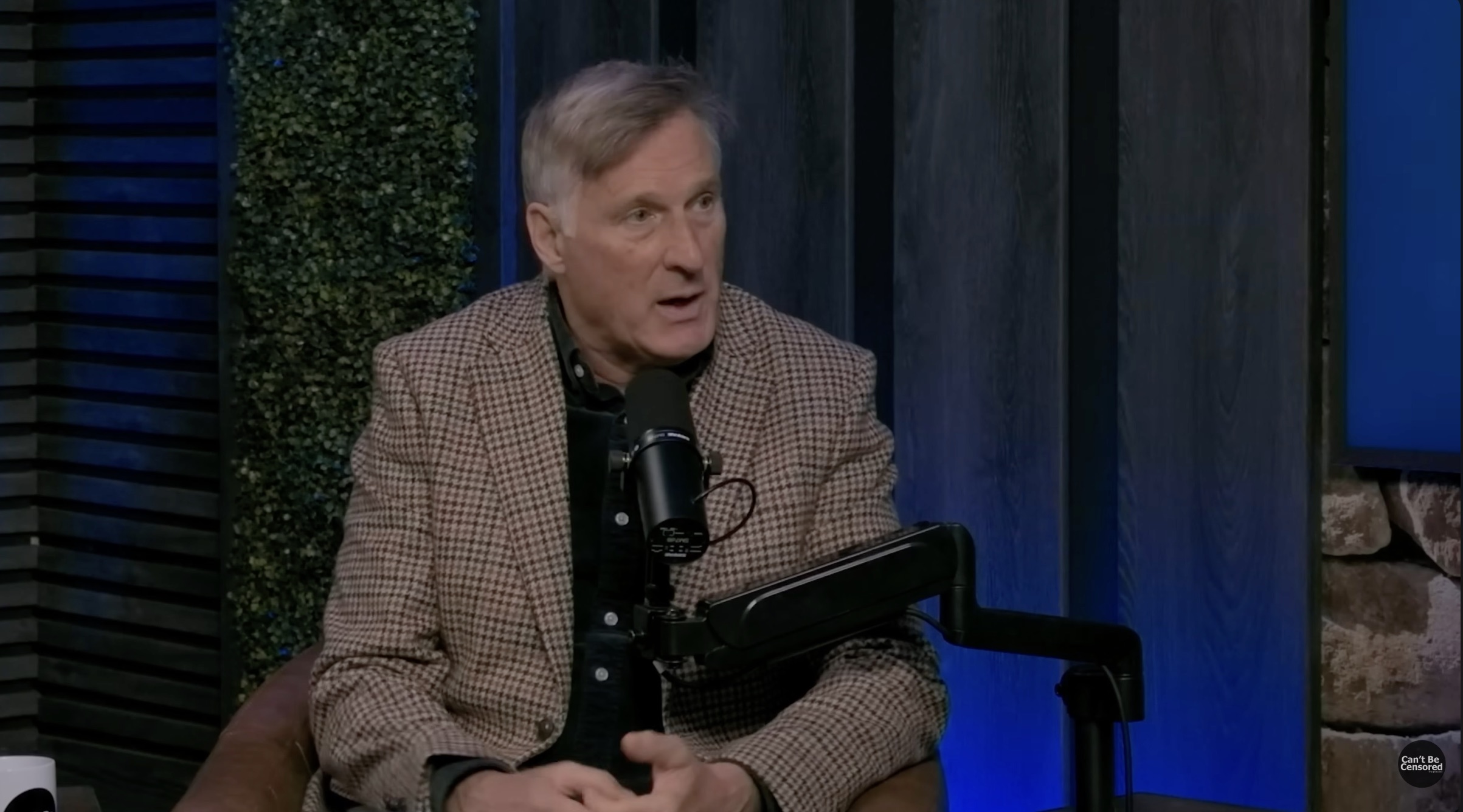
MONTREAL - Few political figures in Canada provoke stronger reactions than Maxime Bernier. To supporters, he is one of the only politicians willing to speak candidly about immigration, government spending, and political correctness. To critics, he represents a style of politics that risks deepening division at a moment when Canada is already grappling with social and economic strain.
In a wide-ranging conversation on Can't Be Censored, Bernier sat down with hosts Travis Dhanraj and Karman Wong to discuss why he believes Canada is only now beginning to openly confront issues he says mainstream politicians avoided for years: immigration levels, cultural integration, affordability pressures, and the limits of political debate.
"The best example is the immigration debate," Bernier said. "When we started the party that was our position to have at the maximum of 150,000 immigrants a year and people were calling me racist... because of that." He added: "The public opinion has shift[ed]."
For Bernier, immigration remains the defining political issue of the moment.
The People's Party leader argued that concerns once dismissed as politically unacceptable are now increasingly entering the mainstream as Canadians face mounting pressure on housing, healthcare, affordability, and public infrastructure. He pointed to what he sees as a growing willingness among voters to question whether Canada's immigration system is functioning at a pace institutions can realistically absorb.
Bernier defended the PPC's proposal for a temporary pause on most immigration streams, arguing that Canada should first stabilize housing supply, healthcare systems, and economic conditions before reopening immigration at higher levels.
"That's why we are for a pause on immigration until we fix all these problems," Bernier said. "After that let's do what we did in the past opening our doors to real immigrants that are coming here because they share our values."
The conversation did not avoid difficult or controversial territory.
Bernier revisited language he has used publicly around demographic change, multiculturalism, and what he sees as the consequences of rapid population growth. Critics have argued some of this rhetoric risks stigmatizing immigrant communities or legitimizing broader social anxieties around race and identity. Bernier rejected those criticisms, insisting his concerns are about policy, social cohesion, and sustainability rather than ethnicity or race.
Dhanraj challenged Bernier throughout the interview, pressing him on whether many of the pressures blamed on immigration are in fact failures of governance, including insufficient housing construction, strained institutions, weak infrastructure planning, and governments struggling to manage growth.
Bernier disagreed, saying: "You have to be able to take care of the folks that are here first." He later added: "I agree with you, let's fix all that. That's why we want to have a pause for the time to fix the healthcare system."
Beyond immigration, the discussion widened into politics more broadly.
Bernier criticized both Liberal and Conservative governments for governing through polling, focus groups, and electoral calculations rather than political principles, arguing major parties increasingly tell voters what they want to hear rather than advancing consistent ideas. He was particularly critical of the Conservative Party under Pierre Poilievre, accusing it of adopting rhetoric similar to the PPC while failing to embrace comparable policy positions.
The interview also explored Bernier's assessment of Prime Minister Mark Carney, Canada's economic direction, and the rise of populist politics internationally. On U.S. President Donald Trump, Bernier expressed agreement with some cultural and political critiques associated with Trump while distancing himself from what he described as more unpredictable or interventionist tendencies.
Underlying much of the conversation was a broader question increasingly shaping politics in Canada: how does a country have difficult conversations about immigration, identity, economic pressure, and national cohesion without deepening polarization? The discussion closed with a broader conversation around freedom of speech, political discourse, and whether Canadians are becoming more willing to openly debate contentious issues.

Conversation
0 commentsSign in to join the conversation and comment on this story.
Loading conversation...