Is Dissent Being Rebranded as Dangerous?
By the Editors of Can’t Be Censored
TORONTO – June 26, 2025
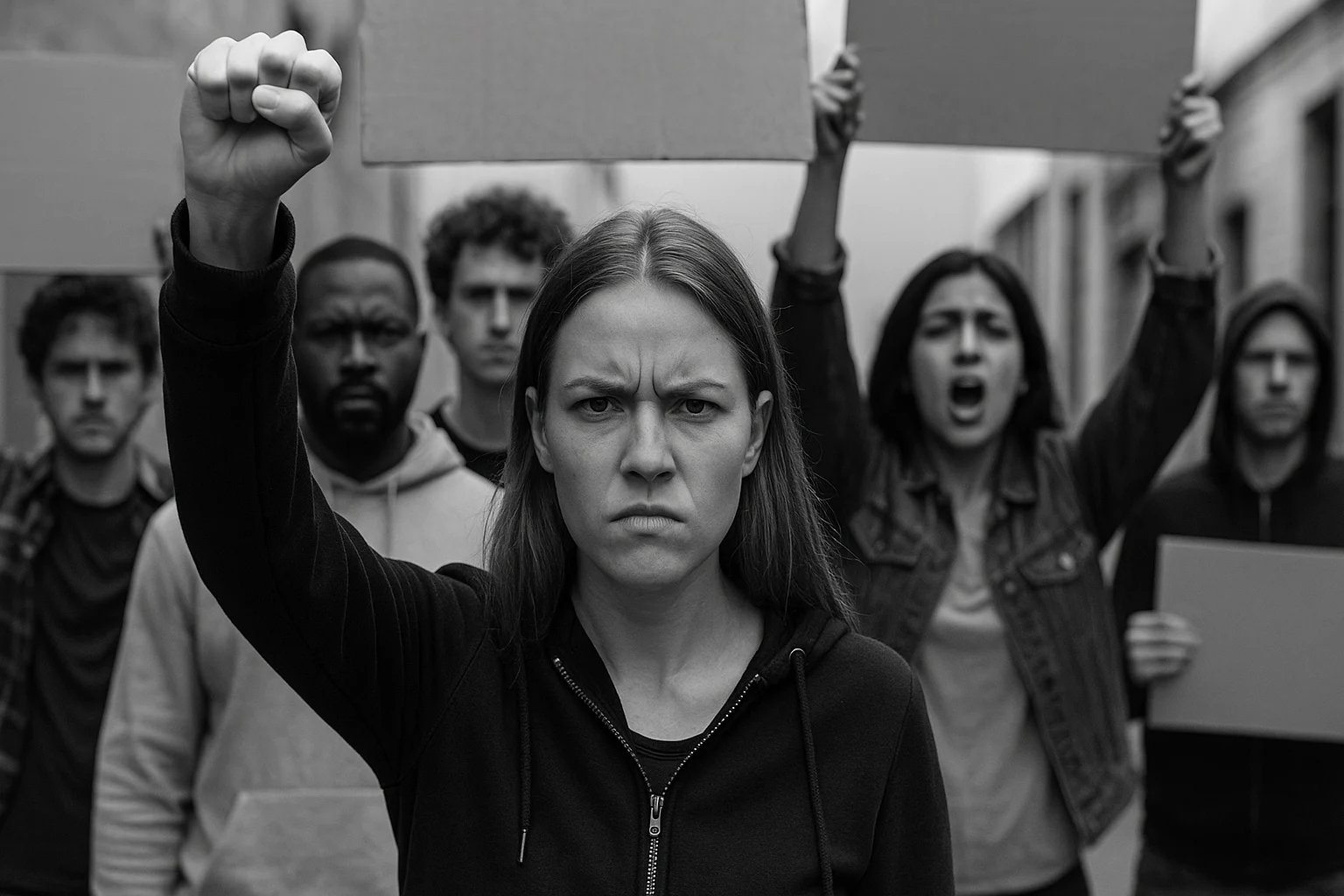
Across Canada and much of the Western world, the role of public protest is undergoing a subtle but significant transformation. Once viewed as a hallmark of healthy democratic society, dissent is increasingly being portrayed as a destabilizing force — something to be monitored, contained, and in some cases, criminalized.
In the post-pandemic political landscape, peaceful demonstrations have been met with a level of scrutiny and enforcement once reserved for far more extreme behaviour. The language used to describe dissent has changed, too. Protesters are no longer simply “activists” or “concerned citizens” — they’re being labeled as “radicalized,” “extremist,” or “threats to public order.” These terms carry weight, especially when echoed by institutions with the power to act on them.
Canada has seen this trend firsthand. In the aftermath of the 2022 Freedom Convoy, organizers were subjected to extensive legal proceedings, asset freezes, and surveillance. Most notably, protest leader Tamara Lich — who did not engage in violence — faced criminal charges and restrictions that some legal observers described as disproportionate.
Outside Canada, similar dynamics have played out. In the UK, nonviolent protesters have been detained under expanded public order laws. In France, Germany, and the Netherlands, farmers demonstrating against environmental regulations have been arrested and fined in large numbers.
Meanwhile, tech platforms — often under pressure from governments — continue to remove content and suppress accounts that challenge official narratives. While these actions are frequently justified in the name of safety or misinformation control, they raise deeper questions about the limits of acceptable speech in a digital age.
To be clear, no society is obligated to tolerate hate, incitement, or violence. But the recent trend goes further — encompassing legal protest, political opposition, and even the open questioning of public policy. The result is a narrowing of the space in which disagreement is allowed to exist.
This rebranding of dissent isn’t always overt. It happens subtly — through changes in language, regulation, and tone. But the effect is clear: fewer people are willing to speak publicly, not because they’ve changed their beliefs, but because they’re worried about the consequences.
In a democracy, dissent should not be feared — it should be protected. It’s how systems self-correct, how bad ideas are exposed, and how good ideas are strengthened. Without it, public debate becomes an echo chamber. And in that silence, accountability dies.
As Canada and other democracies grapple with rising polarization, political instability, and the fast-changing digital information space, the question isn’t just how we deal with misinformation or extremism. The deeper question is whether we can still recognize the difference between dangerous ideas — and unpopular ones.
