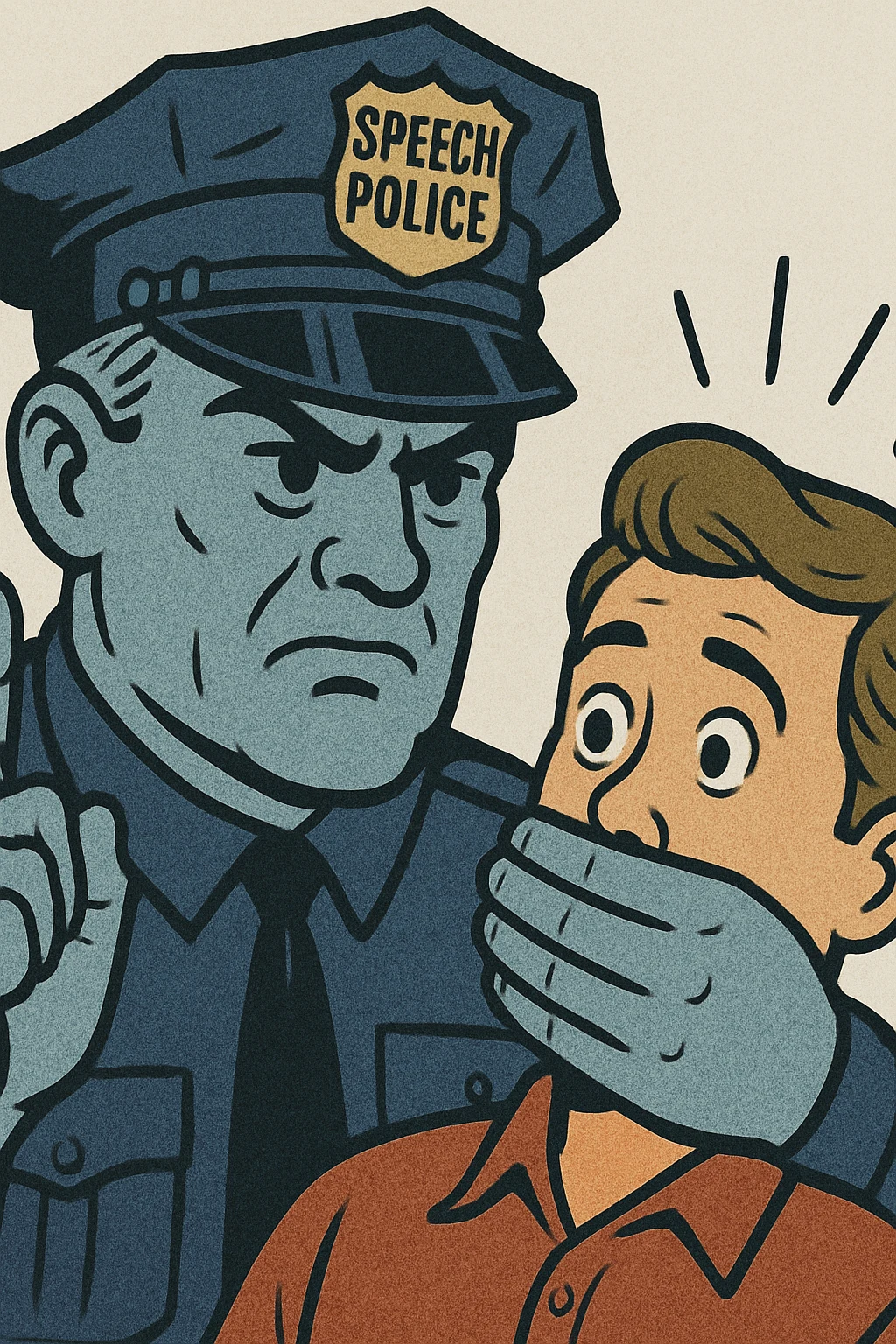
How Speech Codes Are Killing Male Friendships
By the Editors of Can’t Be Censored
TORONTO – June 26, 2025
In locker rooms, group chats, offices, and campus hangouts across the country, an old ritual is quietly dying: the way men talk to each other.
For generations, male friendship thrived on a mix of banter, dark humour, brutal honesty, and yes — the occasional inappropriate joke. It wasn’t always polite, but it was bonding. It was how guys built trust, tested loyalty, and created safe spaces to say the things they couldn’t say anywhere else. But now, more and more men are second-guessing every word.
One off-colour joke. One misread text. One overheard comment in the wrong context — and suddenly you’re “problematic,” “unsafe,” or worse, facing HR. What used to be private is now policed. Screenshots are forever. Tone doesn’t translate. Intent doesn’t matter. The result? Fewer real conversations and more guys going silent.
At the heart of this shift is a culture increasingly built around risk-aversion and image management. In schools, boys are taught to police their language. In offices, workplace guidelines advise “avoiding male-oriented slang or jokes.” On social media, male humour is often taken literally — then punished for it. The message is clear: speak carefully, or don’t speak at all. But that silence comes at a cost.
Study after study shows that men are lonelier than ever. Friend groups are shrinking. Phone calls are down. Suicide rates are up. And while the causes are complex, many men will tell you this directly: they don’t feel safe being themselves, even around other men. Not emotionally. Not socially. Not verbally.
Friendship — real friendship — isn’t built on sanitized small talk. It’s built on the freedom to say the wrong thing, work it out, and still come back the next day. That’s how trust is forged. And when that’s gone, what’s left is a shallow version of connection, filtered through fear.
This isn’t a call for cruelty or ignorance. There’s a difference between being hurtful and being honest. But the current atmosphere doesn’t just discourage malice — it flattens everything. It assumes offense where none is intended and treats awkwardness like aggression. Ironically, the very culture that claims to support men’s mental health often undermines the only relationships that sustain it.
Masculine friendship doesn’t need to be fixed. It needs to be left alone. Because if you can’t speak freely with your closest friends, who can you be honest with at all?
